An article from Euronews recently suggested that sauerkraut is gaining attention in the United States, with part of that interest linked to comments from Robert F. Kennedy Jr. about his diet built around meat and fermented foods.
It is easy to call it a trend. It probably is, in the way these things tend to be. The product itself hasn’t changed.
In Eastern Europe, including Moldova, fermented cabbage has been made and eaten for generations. In Moldova, it’s simply called varză murată. No special positioning around it. No particular story. Just a practical way to preserve cabbage and carry it through the colder months.
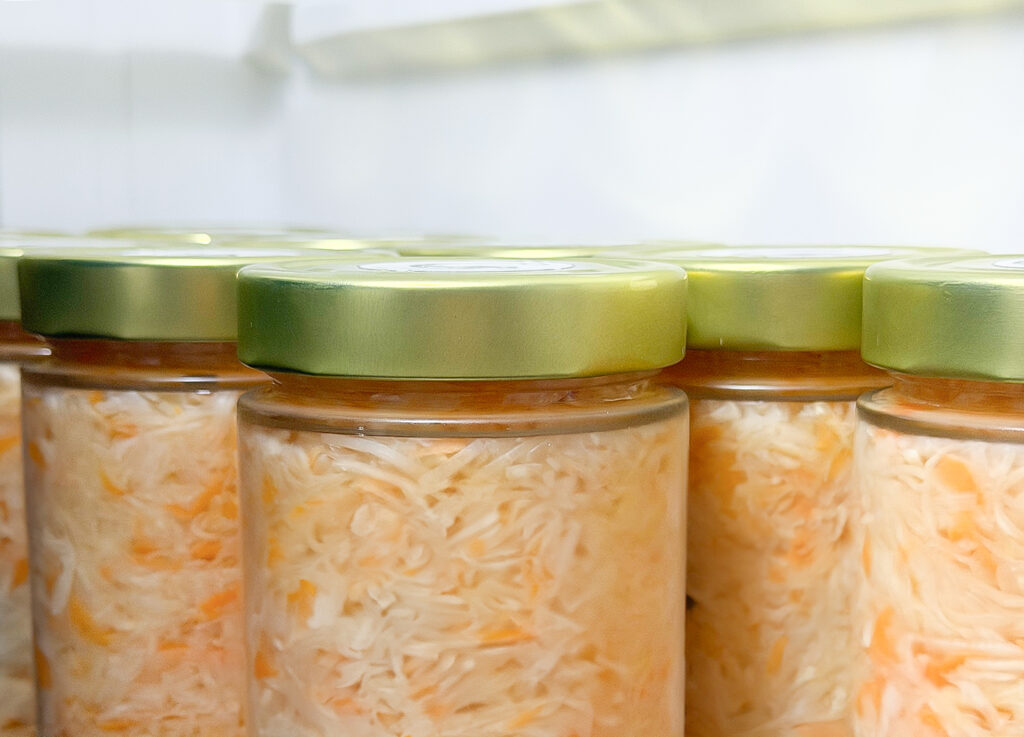
The method is still very simple. Cabbage is prepared, salt is added, and time does the rest. There isn’t much to adjust once it begins, and there isn’t really a reason to.
Now it’s talked about very differently.
Most people now bring it back to gut health, probiotics, and functional nutrition. Some of that is valid, but it also compresses something quite broad into a single idea. Fermented foods don’t really work as a shortcut. They make more sense as part of a wider way of eating, where time and ingredients matter.
At Ghemu Farm, sauerkraut isn’t something we’ve “discovered” or tried to reinvent.
We use the same method that’s been used for a long time: good cabbage, carrots, the right amount of salt, spices, and the right conditions for fermentation, time, lack of light, and a stable temperature. The flavour settles on its own over two months.
Something so ordinary gets picked up, renamed, and presented as if it were new. None of that really changes the process.
And that is where the value sits: not in calling something a “superfood”, but in understanding what it already is and allowing it to remain that way.